Collecting, preservation & presentation
By Royal Appointment: The Art of Handling, Housing & Dispatching Vinyl Records
An unnecessarily civilised guide to protecting records, observing proper protocol, and ensuring that no sleeve suffers an undignified exit.
Written under a pen name, with generative AI assisting in exploration, drafting and editing. Not all factual claims have been independently verified. The decision to publish, and responsibility for the result, are mine.
An Audience with His Majesty's Vinyl
There are certain things one simply does not do in polite society.
One does not speak with one's mouth full. One does not push ahead in a queue. And one most certainly does not send a cherished first pressing through the British postal system rattling about inside a cardboard envelope with all the structural integrity of a damp digestive biscuit.
Standards, after all, must be maintained.
In the presence of the late Queen Elizabeth II, there were conventions to observe: appropriate forms of address, measured behaviour, and an understanding that one was in the company of something rather more important than oneself.
Vinyl records, admittedly, are not members of the Royal Family. Most have never opened a hospital, addressed the Commonwealth or owned a corgi.
Nevertheless, when a record has survived several decades, changed hands multiple times and somehow retained its original artwork, it deserves at least a modest degree of ceremony.
Especially when entrusted to a delivery van.
Welcome, then, to the surprisingly consequential world of record packaging: a discipline in which the difference between thoughtful preparation and casual indifference can be measured in millimetres of torn cardboard.
And occasionally, several hundred pounds.
I. The Royal Household: Understanding the Entourage
Before considering how to package a record, we must establish precisely whom — or what — we are protecting.
A vinyl record is rarely travelling alone. Depending on its age and edition, it may be accompanied by a small household of supporting characters.
There is the record itself, the principal guest, whose playing surface must be protected from dust, abrasion, fingerprints and unnecessary contact.
Then comes the inner sleeve, its immediate attendant. Sometimes this is a plain paper envelope; sometimes an elaborate printed sleeve containing lyrics, illustrations, credits or photographs.
Next is the outer jacket, the public face of the occasion. Its artwork, typography, finish and physical construction are often central to the record's appeal.
And finally, there may be posters, booklets, inserts, stickers, obi strips, postcards or other ephemera.
To the casual observer, these might appear to be bits of paper.
To the collector, they can be the difference between an ordinary second-hand record and a particularly desirable complete edition.
The distinction matters because the packaging itself is not merely disposable protection. On many releases, it is part of the collectible object.
A missing insert is rather like discovering that the Crown Jewels have been returned with a polite note explaining that the velvet cushion was thrown away.
II. The Seating Arrangement: Why the Record Should Travel Outside Its Jacket
Here we arrive at one of the most useful — and initially rather counterintuitive — conventions of vinyl shipping.
An opened record is often safer travelling outside its cardboard jacket than inside it.
It sounds faintly improper.
Surely the record belongs inside its sleeve? Is that not precisely what the sleeve is for?
Indeed. But the problem is not where the record lives. It is what happens when it travels.
During transit, a record can move within its jacket. The disc is relatively heavy, and its rigid circular edge concentrates force against the surrounding cardboard.
A sufficiently abrupt impact can cause the record to push through the jacket's top, bottom or spine.
The resulting damage is known as a seam split.
It is one of those minor catastrophes that appears almost comically disproportionate to the event that caused it.
A perfectly respectable sleeve enters the postal system.
A wounded veteran emerges.
For vintage and collectible records, a seam split can reduce the sleeve's condition grade, visual appeal and market value. More importantly, it is damage that careful packaging could often have prevented.
The preferred procedure for many opened LPs is therefore straightforward:
- Remove the record from the cardboard jacket.
- Keep the disc in a clean, suitable protective inner sleeve.
- Position the separately sleeved record behind the jacket, within a sufficiently roomy protective outer sleeve.
- Ensure that any original printed inner sleeve and inserts are protected and included.
- Secure the assembled contents within a properly constructed record mailer.
The record and jacket remain together, but the record is no longer positioned to strike the jacket's seams from within.
Think of it as providing separate carriages for the monarch and the ceremonial regalia.
Everyone arrives at the same destination.
Nobody is required to sit on the crown.
A Case Study: Superman Arrives in Civilised Fashion
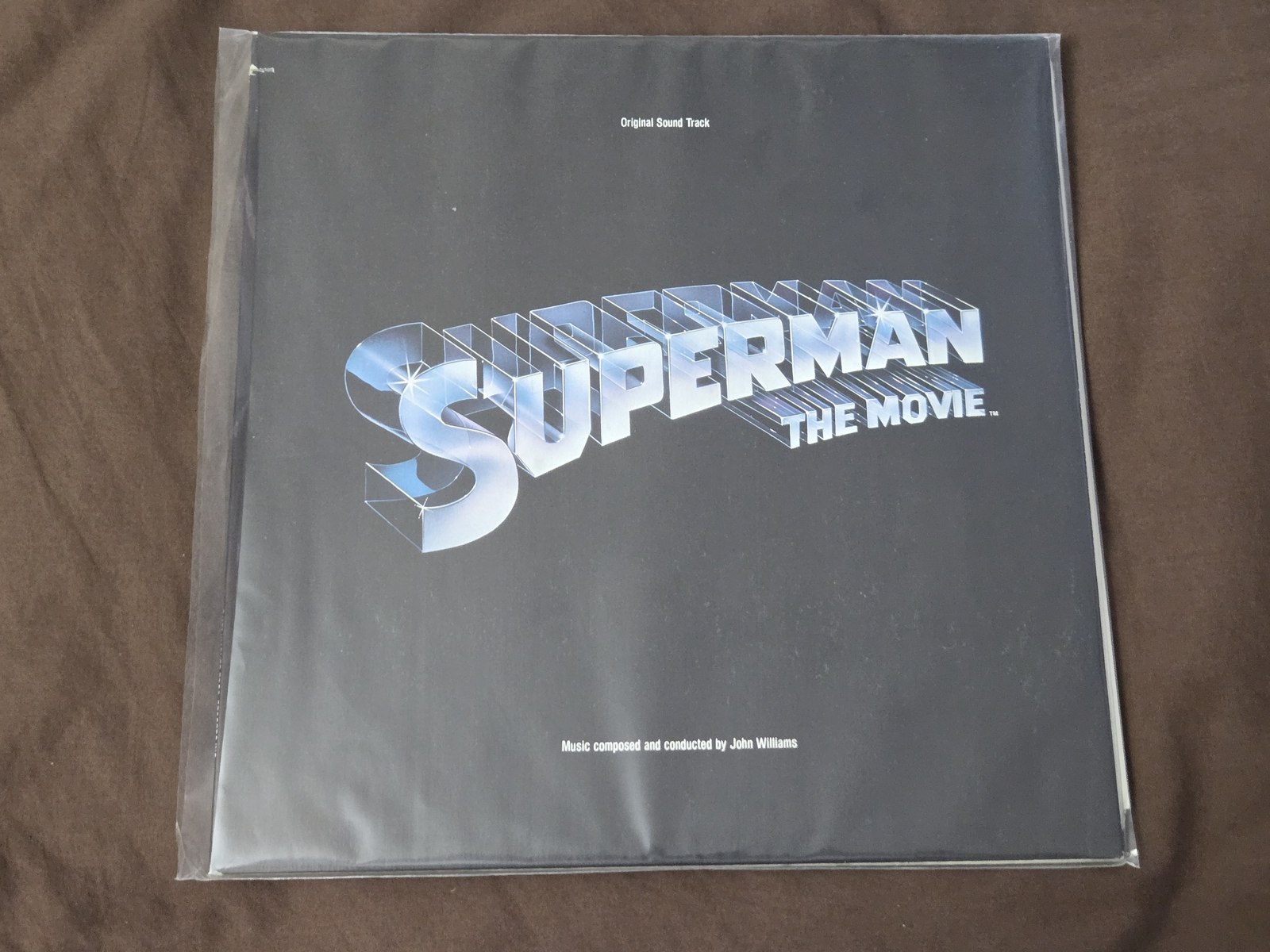
A recently acquired vintage copy of John Williams' Superman: The Movie soundtrack provided a rather pleasing demonstration of this principle.
The seller had removed the record from its original cardboard jacket, retained it in a paper inner sleeve, and placed the components together inside a protective transparent outer sleeve.
An apparently modest gesture, but one that revealed an understanding of a genuine hazard in transporting collectible records.
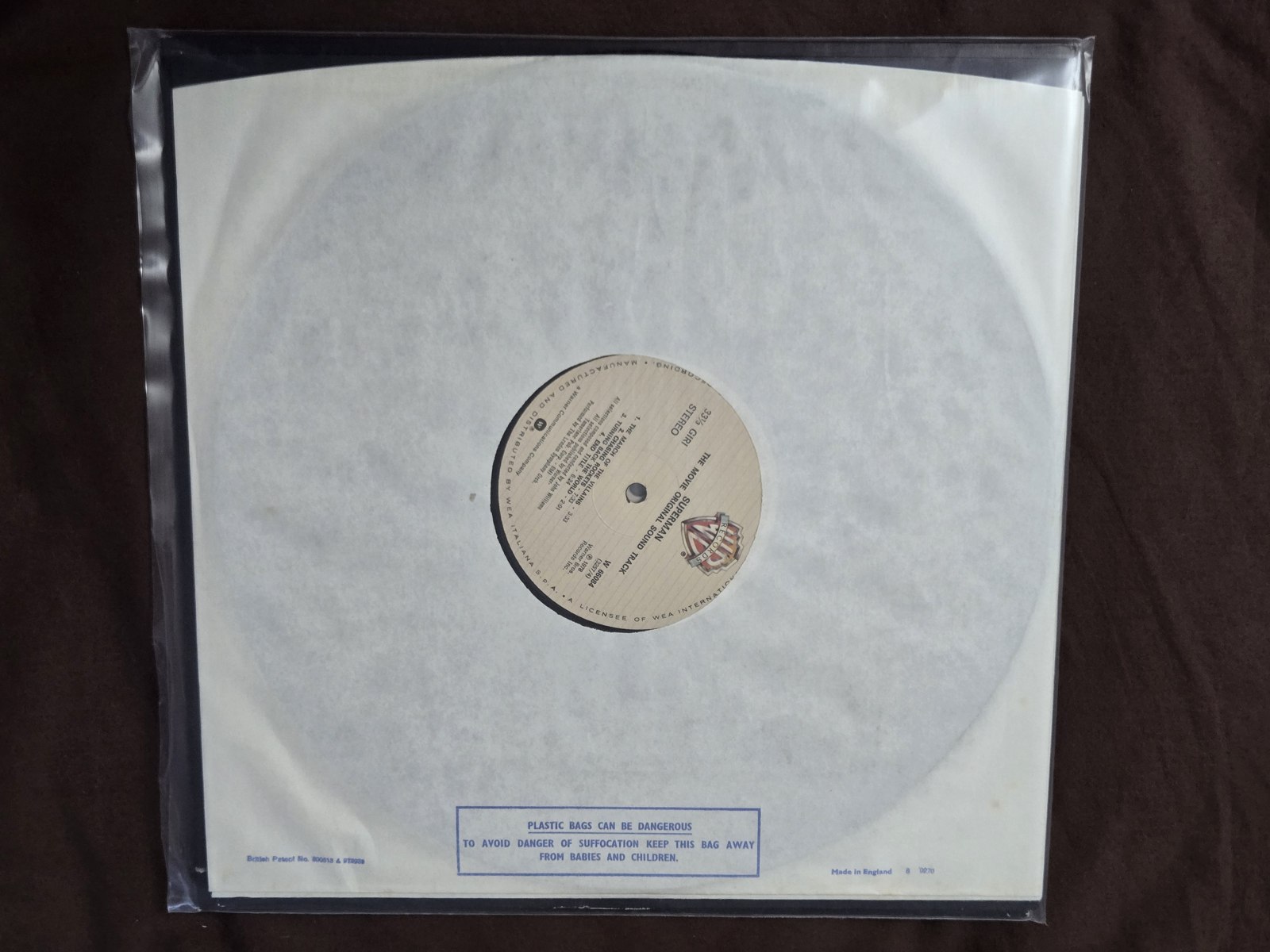
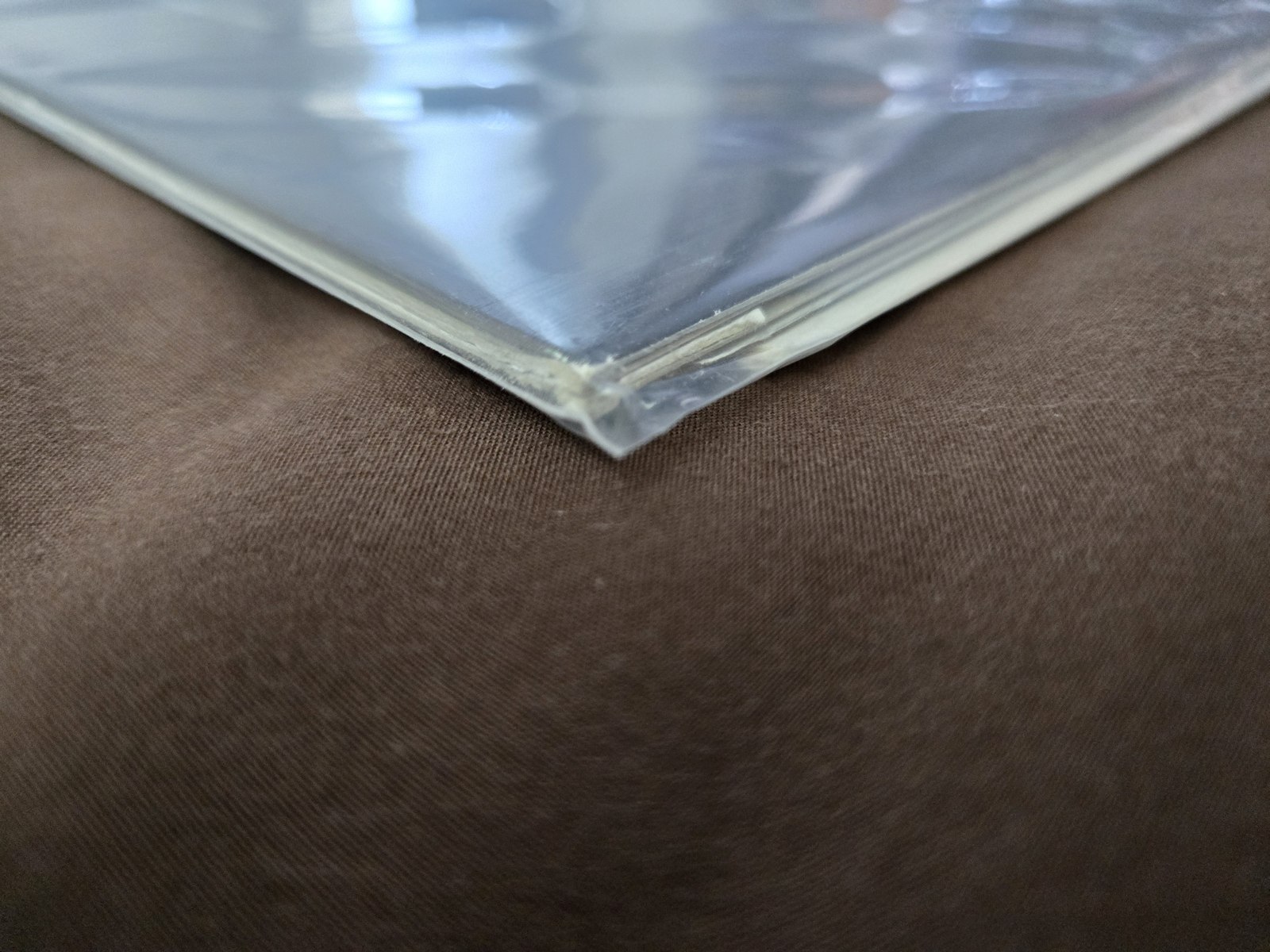
The photographs accompanying this article show the separately housed record, its period Warner Bros. label and the jacket corners within the transparent outer sleeve. Existing wear remains visible: protection preserves what survives; it does not make a vintage jacket new again.
It is worth stressing that the photographs illustrate the internal arrangement, rather than the complete shipping method. The record still requires a rigid, appropriately padded mailer for transit.
Nor can careful packaging alone establish the accuracy of a seller's grading.
Nevertheless, there is something reassuring about receiving a record from someone who has evidently considered what might happen between dispatch and delivery.
Superman, it seems, had been provided with an appropriate escort.
And somebody had taken precautions to protect his cape.
III. The Dress Code: Inner Sleeves, Outer Sleeves and Other Matters of Decorum
Not all sleeves are created equal.
Traditional paper inner sleeves have served the record industry for generations. They are inexpensive, familiar and often entirely appropriate as original components of a vintage release.
However, ordinary paper can shed fibres and, with repeated handling, contribute to superficial scuffing.
For records intended to be played and handled regularly, a clean, archival-quality, anti-static inner sleeve — typically made from suitable polyethylene materials — is often preferable.
Original printed inner sleeves should not be discarded simply because a modern alternative is better for direct record contact.
They are part of the edition.
Preserve them separately, preferably in a way that avoids further creasing, tearing or abrasion.
The outer protective sleeve serves a different purpose. It helps shield the cardboard jacket from shelf wear, dust, handling marks and contact with neighbouring records.
But a word of caution: protective plastic is not automatically good plastic.
Collectors should favour materials intended for long-term record storage, such as appropriate polyethylene or polypropylene sleeves, and avoid unsuitable soft PVC sleeves that may create problems over time.
Nor should records be crammed into excessively tight protective covers.
A sleeve that requires the combined efforts of two footmen and a shoehorn to remove is perhaps not fulfilling its intended purpose.
Protection should never become another source of damage.
IV. The State Visit: Preparing a Record for Dispatch
Once a record is ready to leave its familiar surroundings, a rather more formal procedure begins.
At VinylCue, the objective is not simply to make a parcel look presentable.
It is to preserve the condition described to the buyer.
First: The Inspection
Before dispatch, confirm the correct edition, record count and included inserts.
Check the jacket for existing splits, creases, corner wear and other condition issues. Check the disc and its protective sleeve.
For an opened record, verify that the grading and description remain accurate.
Photographs taken before packaging can provide a useful record of its condition.
Second: The Separation
Where appropriate, place the record in its protective inner sleeve outside the cardboard jacket, keeping the components together within a suitable outer sleeve.
For gatefolds, unusual constructions, delicate inserts and specialist packaging, the precise arrangement may need adjusting.
There is no universal seating plan.
Third: The Reinforcement
A proper rigid record mailer is essential.
Use suitably sized mailers and protective pads or stiffeners, with particular attention to corners and edges. The contents should not slide about inside the parcel.
Equally, excessive pressure should be avoided. Overpacking can cause compression, warping of the jacket or damaged corners.
A parcel should be secure, not subjected to interrogation.
Fourth: The Weather
The British climate has made many contributions to civilisation, though reliable dryness is not among them.
A suitable moisture-resistant protective layer can provide additional reassurance, especially during prolonged or unpredictable delivery conditions.
It should not trap moisture against a damp record or jacket.
Fifth: The Final Farewell
Seal the mailer securely, confirm the address, and use an appropriate tracked or insured service for the item's value.
Then, and only then, may the record depart.
Preferably without a twenty-one-gun salute.
V. The Matter of Factory-Sealed Records
There is, inevitably, an exception to the ceremonial arrangements.
A factory-sealed collectible cannot ordinarily have its record removed from the jacket without breaking the seal.
And for certain editions, the original shrink-wrap, hype stickers and untouched presentation contribute significantly to collectibility.
Opening the record merely to follow a shipping convention may therefore destroy precisely the quality the buyer was paying to preserve.
The sensible approach is to leave sealed copies sealed unless the buyer explicitly requests otherwise.
Use suitable external reinforcement and a properly sized mailer, while recognising that seam-split risk cannot be eliminated entirely.
A sealed record is not automatically a flawless record, either. Manufacturing defects, warps and pre-existing sleeve damage may remain hidden.
The important thing is to describe the item accurately and package it responsibly.
Royal protocol, after all, is supposed to prevent embarrassment, not manufacture it.
VI. The Receiving Line: How a Collector Should Store Their Records
The ceremony does not end when the parcel arrives.
A record's long-term condition depends on how it is stored.
Ideally, LPs should stand upright, supported without being tightly compressed, in a reasonably stable indoor environment away from direct sunlight, excessive heat and moisture.
Avoid leaning records at severe angles or stacking substantial quantities horizontally for prolonged periods.
Separately sleeved records can remain behind their jackets inside protective outer sleeves, provided there is sufficient space and the arrangement does not create pressure, bending or instability.
Care is particularly important with heavyweight discs, box sets, unusually thick jackets and fragile vintage packaging.
And while collectors may reasonably disagree over preferred sleeve brands, storage systems and protective materials, the underlying principle is refreshingly uncomplicated:
Preserve the record without damaging the thing you are trying to preserve.
An admirably British ambition.
Even if we occasionally make rather a production of it.
VII. The VinylCue Standard: Courtesy as a Form of Conservation
There is something rather revealing about the way a seller packages a record.
A carefully prepared parcel does not guarantee that the seller possesses exceptional musical knowledge, impeccable grading standards or a particularly sophisticated understanding of the record market.
But it demonstrates an appreciation that the buyer has purchased a physical object whose condition matters.
For a collectible record, the packaging is not simply the means by which a sale is completed.
It is the final act of stewardship.
The seller has described the object, represented its condition, accepted payment and undertaken to deliver it.
Packaging is where those promises encounter reality.
A seam split, crushed corner or damaged insert may seem insignificant to someone who regards the record primarily as a means of reproducing music.
To someone who values the edition as an artefact, those details are part of the object itself.
This is particularly true of film soundtracks, where the sleeve artwork, typography, photographs, liner notes and associated ephemera can be inseparable from the pleasure of ownership.
The record may contain the music.
The packaging helps preserve its history.
And while nobody needs to bow, curtsey or address a twelve-inch LP as Your Majesty, a little ceremony is hardly unreasonable.
After all, if a record has survived forty years in respectable condition, it would be rather unfortunate for its most dramatic experience to occur during the final forty miles of delivery.
Long live the record.
And may its seams remain gloriously intact.
Editorial note: Packaging methods should be adapted to the construction, condition and value of each release. The procedures described are general preservation recommendations, not guarantees against transit damage.